Jala’s Broken Teeth — Akhtar Mohiuddin

Jun 7, 2025 | Fiction

TRANSLATED FROM KASHMIRI BY NAGEEN RATHER
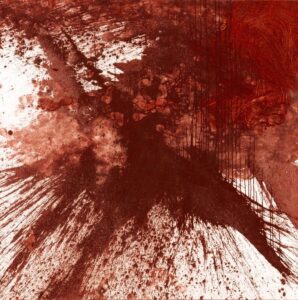


The donkey driver Rasul’s eldest daughter had completed her B.A. and then also earned a law degree. Now a small-sized nameplate hung on the gate of their dilapidated house. JALEELA RASUL: BA, LLB.

To Rasul this name plate meant a bright star gracing his forehead.

Today was curfew. Only soldiers were seen on the road. Jala sneaked out of the gate of her house and outside  accosted the army officer in Urdu,

  “Brother, my father has to go across the road. Would you permit him? And he has to come back as well.”

The army officer scanned Rasul from top to the toe. His stance softened a little by both Jala’s beauty and  Rasul’s age and he said to Rasul ,

  “Alright, alright. Go, Uncle.”

Rasul crossed the road. With a cheerful face, Jala returned and cast a proud glance at the nameplate on the gate before stepping inside.

  An hour later, there was a commotion outside; a voice boomed, “Hey, old man, come here!” This was followed by the sound of someone crying. Jala rushed out and saw another army officer mercilessly beating her father. She sprinted to her father, held his arm protectively, and then confronted the officer with a fierce tone:

  “Why are you beating my father? It was your officer who gave him permission to cross!”

  “Girl, stop talking nonsense and get lost.” The officer said scornfully.

Jala’s whole body was overtaken by a burning rage and stomping her foot she retorted:

  “Don’t you have parents? You’re the one talking nonsense!”

  And then, so unexpected  like a thunder striking on a clear day, Jala was struck down, her body crashing to the ground, her chest, neck injured and jaw smashed.

  The next day, after the curfew had been lifted, Rasul stood on the road, tears streaming down his face as he  scoured the ground, searching for something. Without being asked by anyone, he mumbled to himself,

  “My Jala’s broken teeth—they must have fallen around here somewhere.”


Also read Poems — Dhee Sankartranslated from Bengali by Camellia Paul, and published in The Antonym.

Poems — Dhee Sankar


Follow The Antonym’s Facebook page and Instagram account for more content and exciting updates.
Akhtar Mohiuddin

Akhtar Mohiuddin

Akhtar Mohiuddin was  a pioneering Kashmiri novelist, playwright, critic and short story writer. His work Doud Dag is considered the first novel in Kashmiri language. He was awarded Sahitya Akademi Award in 1958 for his short story collection Sath Sangar and  was the recipient of the Padma Shri award.

 Nageen Rather

Nageen Rather

Nageen Rather is an academician, independent researcher, writer and translator.  His short stories and the translated works have featured in Adelaide, WHLReview,  Punch, Himal Southasian among others. He is the Winner of the Wordweavers Short Story Prize. Currently he is working on The Basketful of Sorrow—an English translation project of a poignant Kashmiri novel funded by The University of Chicago.  

Browse More

Empowering African Voices Online: The Impact of WikiAfrica Education

Written by Dina Rosa Agyemang Did you know that Wikipedia, the world's most popular online encyclopedia, has more information about the city of Paris than about all 55 African countries combined? Africa is a continent rich in resources and technological know-how, yet...

Three Poems by Andrea De Alberti

Translated from the Italian by Jessica Harkins

High Tide by Sanjeev

Translated from the Hindi by Varsha Tiwary

Two Poems by Manishankar

Translated from the Bangla by Soma Roy and Kamalika Mitra

Three Poems by Andrea De Alberti

Translated from the Italian by Jessica Harkins

Al-Baqa Café, Gaza by Francis Kurkievicz

Translated from the Spanish by Francis Kurkievicz

Two Poems by Nirmala Putul

Translated from the Hindi by Pooja Sancheti

Two Poems by Marisela Capriles Vergara

Translated from the Spanish by James Richie

Bitemarks by Shyamkrishnan R

Translated from the Malayalam by Ananthu Sunil

A Daughter’s Echo — Kiran Prasad Rajanahally

TRANSLATED FROM KANNADA BY SAHANA PRASAD     “There is a saying in the tale of Sankhyaayana, my dear daughter, that… when the impermanent body perishes, the soul remains unaffected! This has been beautifully conveyed in the rhythm of association. Rhythm here...