Written by Dina Rosa Agyemang
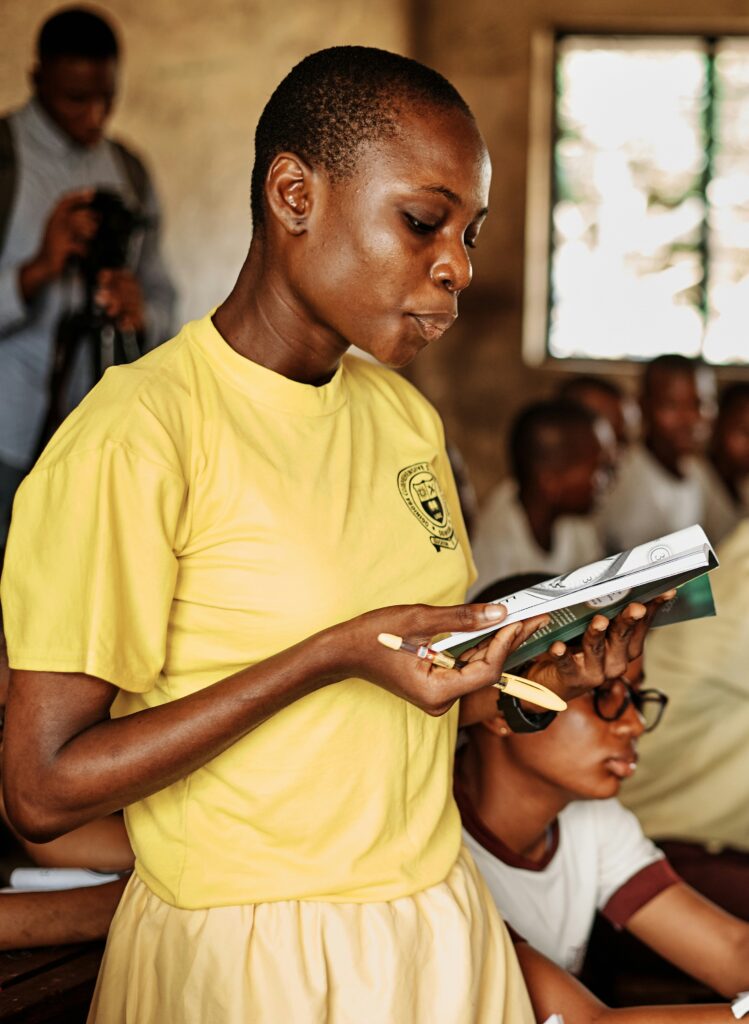
Did you know that Wikipedia, the world’s most popular online encyclopedia, has more information about the city of Paris than about all 55 African countries combined?
Africa is a continent rich in resources and technological know-how, yet it remains underrepresented online on a global scale. This gap led to the creation of WikiAfrica Education, a project programme launched by the Moleskine Foundation in partnership with Fondazione Aurora.
WikiAfrica Education (WAE) is a platform designed to empower African voices, highlighting the continent’s extensive history, languages, cultures, and communities on Wikipedia. Through this initiative, Moleskine Foundation and Fondazione Aurora aim to help young Africans transition from passive consumers to active creators of knowledge. The project focuses on training African youth to increase both the quantity and quality of Wikipedia content about Africa, driving progress in two significant areas for collective local development.
First, WAE invests in education by providing ICT, research, and writing skills to students. The program equips undergraduate and postgraduate students aged 18 to 35 with essential skills and motivation, preparing them for the global professional landscape.
Second, the initiative enhances information access and learning opportunities for African communities often isolated from global narratives. By inspiring a generation of creative thinkers to shape Africa’s digital presence, the program fosters cultural understanding and boosts African representation worldwide.
WikiAfrica Education also promotes intergenerational dialogue in local African languages, challenging colonial language barriers and demonstrating how preserving local languages and cultural heritage can contribute to a healthier business environment across the continent
The program offers two main formats, both committed to promoting identity, cultural pride, and stronger international African youth networks.
The Higher Education Initiative (HEI), launched in December 2020, engages university students who speak and write African languages, training them to create digital content on Wikipedia. This initiative is delivered entirely online, with sessions conducted in English, French, or Portuguese by a skilled Wikimedia training manager.
Through ten sessions, HEI reached the publication of 800 articles in at least 16 African languages, including Kinyarwanda, Kiswahili, Dagbani, Igbo, Isizulu, Isixhosa, Lologooli, Yoruba, Sepedi, Twi, Amharic, Isixhosa, Emakhwa, Yemba, Tigrinya, and Moore, among others.
AfroCuration is another popular program format that infuses cultural elements into Wikipedia editing sessions, where participants collaborate to write, enhance, and translate articles. These events, blending creativity, knowledge, and activism, go beyond standard edit-a-thons to provide a culturally rich and inspiring experience. Local cultural partners are central to AfroCurations, helping to engage the community and strengthen the event’s impact.
In the last three years, around 900 young people have gained new skills and broaden their horizons and they produced articles in local languages that have exceeded 2.5 million views. Producing high-quality content on Wikipedia relevant to African languages, cultures, and nations is crucial for the continent’s digital presence. It enables knowledge sharing that makes resources more accessible to African communities.
For more information contact us at: [email protected]