A Writer’s Joy and Other Poems—Akhmet Baitursynuly

May 2, 2023 | Poetry

TRANSLATED FROM THE KAZAKH BY JAKE ZAWLACKI

Image used for representation  


A Writer’s Joy

A word alone I might not take, I might,

An ear alone I might not warn, I might.

Simplicity isn’t simple,

Maybe words didn’t fit, maybe they did.

To which purpose will I arrive,

Not just another, maybe failure.

In this world I have my love, my passion—

Although small, I’ll leave my mark.


To the Enemy: Words of the Fall

The spirit loses interest,

Static, unmoving.

The body loses interest,

Unsuffering, beautiful.

The people lose interest,

Trusting each other.

Lies rise in power,

Truth defeated, exhausted.

The garden unbound,

A promise broken.

Fate forsaken,

Food stolen from me.

Disaster in the hunter,

Feet tripping.

Wolf’s slander

Danger at my heels.

The foe rolls his sleeves,

Knife sharpened, fired.

Of scabs, the crow, the vulture,

Foraging, grazing, hunting.

Unseen envy,

My mood smolders,

Masochistic evil

From scorpion tongue,

“Ah, it’s you!” a call

Mouth filled of blood.

Spirit opened in nearness

Youth poured from the eyes.

Deeds undivided,

Blade washed clean,

“An accident,”

Stabbing the heart, again . . .

Warm hide, I don’t know,

Shedding skin – is it true?

Unyielding ancient friend,

Walking transformed! . . .


To Pull

Sons: this is the path to wisdom.

Daughters: join, listen, watch.

Along this road grow many paths,

Will you look out for them?

Don’t douse the light, don’t leave the riches,

Kin, let’s seek, let’s find wisdom!


Also, read A City Without Women by Sakyajit Bhattacharya, translated from The Bengali by Adrija Ghosh, and published in The Antonym .

A City Without Women— Sakyajit Bhattacharya


Follow The Antonym’s Facebook page and Instagram account for more content and interesting updates.
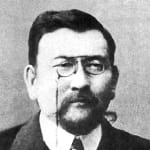
Akhmet Baitursynuly

Akhmet Baitursynuly

Akhmet Baitursynuly (1872-1937) was a Kazakh nationalist at the turn of the century and was highly influential to Kazakh culture both creatively and politically. He was not only one of the members of the Kazakh nationalist group Alash Orda, a provisional government seeking autonomy for the Kazakh people following the Bolshevik revolution (1917), but he also adapted the Arabic script to be used with the Kazakh language, adding new characters for Kazakh letters to a script still used today in parts of China, Afghanistan, and Iran. After being sent to a gulag and executed in 1937, his work in politics, education, poetry, and linguistics were mostly forgotten. However, near the end of the Soviet Union, his memory was rehabilitated and he is now appreciated as one of the intellectual forefathers of modern Kazakhstan.

In 1911, he published his most well-known collection of poems titled Masa, or “Mosquito.” In it, he rallies for the Kazakh people to embrace education and create a future of their own choosing, not one handed to them by Russian imperialists. “A Writer’s Joy,” the second poem published in Masa, shows Baitursynuly’s hopefulness for future readers at a time when literacy among Kazakhs was roughly 5%. This hopefulness is even more clear in “To Pull” as he calls out to the sons and daughters of Kazakhstan to walk a new path as a nation. In a more personal note, “To the Enemy: Words of the Fall ” exemplifies Baitursynuly’s interest in Biblical allegory as he warns against the dangers of ignorance and laziness. These pieces not only represent Baitusynuly’s range as a poet interested in establishing national poetry, but also his sense of urgency for his people at a pivotal time in Kazakh history.

Jake Zawlacki

Jake Zawlacki

Jake Zawlacki is currently a third-year MFA candidate at Louisiana State University and holds a master’s degree in Russian, Eastern European and Eurasian Studies from Stanford University. He has been the recipient of a Fulbright Fellowship to the Kyrgyz Republic and has written scholarly works on Kazakh animation and folklore, and Kyrgyz traditional health practices. His creative work often explores meaning and free will through experimental and hybrid forms and can be found at The Saturday Evening Post, The Journal, and The Citron Review. He is also the cofounder of LitLabs, a free tool for translators to digitize and search their resources with ease.

Browse More

High Tide by Sanjeev

Translated from the Hindi by Varsha Tiwary    Mother would tell us that we hailed from Sonardeeghi village, in Faridpur, now in Pakistan. Even after Bangladesh came into being in 1971, she continued calling it Pakistan. Many Bengalis hailing from that side would...

Two Poems by Manishankar

Translated from the Bangla by Soma Roy and Kamalika Mitra  ⁠✿ Before suicide one has to thinkIf it is the right poisonWhat causes the least pain,Or does not disfigure the face,Or if it leaves bruises under eyes,One needs to know what causes instant deathWithout any...

Three Poems by Andrea De Alberti

Translated from the Italian by Jessica Harkins Lucy This incomplete skeleton became Lucy in ’74and lucent for a few American anthropologists,but the remains are not enough to offer usa portrait of the early phases of human evolution.By coincidence, that same year, in...

Al-Baqa Café, Gaza by Francis Kurkievicz

Translated from the Spanish by Francis Kurkievicz Poetry cannot begin to contemplateAll the tragedies of Gaza,Every day social mediaReports - in loco - radical events,Happenings that hegemonic mediaDisdains, conceals and distortsIn favor of "committed" advertisersWith...

Two Poems by Nirmala Putul

Adivasi Women

Their world extends only so far
as their eyes can see.
Many, many worlds like theirs
are contained in this world. They do not know

Two Poems — Marisela Capriles Vergara

Translated from the Spanish by James Richie   Aqueous Logic A tear is always a tear even if its origin – the well of tears – doesn’t know about it doesn’t remember it doesn’t feel the slightest bit responsible for the lost salt. The tear, all in all, wants only...

Bitemarks — Shyamkrishnan R

Translated from the Malayalam by Ananthu Sunil

A Daughter’s Echo — Kiran Prasad Rajanahally

TRANSLATED FROM KANNADA BY SAHANA PRASAD     “There is a saying in the tale of Sankhyaayana, my dear daughter, that… when the impermanent body perishes, the soul remains unaffected! This has been beautifully conveyed in the rhythm of association. Rhythm here...

Poems — Bhaskar Chakraborty

TRANSLATED FROM BENGALI BY PARTHA PRATIM DAS     Lovers and their Lady-loves One day lovers become husbandsHusbands, no longer loversBut they have omelette or sandwichesStroll around leisurelySmoke country cigarettesAnd watch blue films at night And...

Faith — Mojeer Ahmad Azad

TRANSLATED FROM URDU BY SYED KASHIF     Once again, his case was adjourned. The court had fixed another date, to hear his case, in the next month.      Harish Chand Tripathi was upset with the conduct of court. But he was helpless. He could hardly do...