Book Review by Tanya Jhilik Biswas
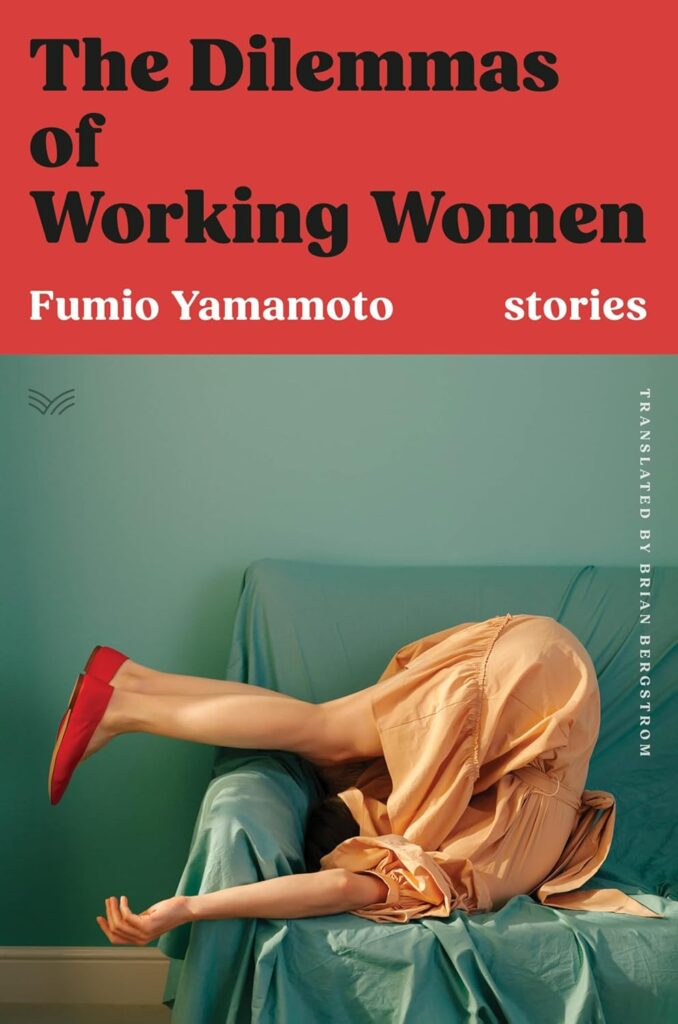
In the opening story, “Naked,” Izumi finds herself adrift and sewing stuffed animals after her divorce has left her alone as well as unemployed. She and her husband used to run their handicraft company together, but it was her “insistence on dominating” everything related to the business that ultimately alienated Izumi from him and made her see him as less of a man. As a thirty-six-year-old unemployed woman, she is expected to eventually get back on her feet. However, her idleness has allowed her to rediscover herself outside her professional identity, and she begins to detest the capacity of the human body to heal and move on. Yamamoto deals with a similar idea in the second story, “Planarian,” where Haruka, a young survivor of breast cancer, loathes the fact that those around her expect her to get back to normal and productive life since her illness is “over.” Her persisting physical weakness and jokes about wanting to be reincarnated as a planarian (a flatworm) capable of regenerating itself are socially inconvenient reminders of her illness. Her story highlights that there is no neat resolution to the experience of cancer.
The third story, “Here, Which Is Nowhere,” focuses on Kato, a housewife in her forties, who begins working part-time night shifts at a wholesale outlet store after her husband is “restructured” (demoted). However, the redistribution of economic responsibility does not result in the redistribution of domestic labor, as the woman has to handle the children and household chores in addition to her new job. The titular story, “The Dilemmas of Working Women,” analyzes the complex relationship between career and marriage. Mito worries that if she accepts the proposal of her boyfriend, a graduate student, she will be the primary breadwinner in the relationship. At the same time, her father, who exerts considerable control over her life despite her being a working woman, insists that she may only leave her home as a married woman.
Unlike the previous stories, the final one, “A Tomorrow Full of Love,” is narrated by a man, Majima, a former salaryman who runs an izakaya (bar). His attachment to Sumie, a customer as well as palm reader at his establishment, is the central focus. Sumie’s evasion of conventional expectations of employment or relationships prevents Majima from being able to define her. She exists beyond the purview of predetermined societal roles.
Yamamoto’s prose, as translated by Bergstrom, although simple and conversational, is rife with social commentary. She has a slice-of-life approach that immerses the readers in the Employment Ice Age of 1990s Japan. Each story is narrated from a first-person point of view and, as noted by the translator, is diaristic in nature.
The narrators have distinct voices which emerge through their daily routines, observations, recollections, and digressions. Yamamoto also employs dry humor, often pointing out the absurdity of unquestioned norms through the flatness of her register. When Mito’s boyfriend says, “Well, I guess it’s about time. We can get married,” the author critiques the heterosexual expectation of marriage—it is “as if he is granting permission.” On the other hand, Haruka, “who’d given herself breast cancer out of sheer slovenliness,” uses dark humor to cope with the aftermath of her illness.
Fumio Yamamoto honed her literary voice throughout the 1990s, experimenting with and subverting the conventions of romance fiction. In the titular story, Mito realizes that she and her partner are in an inverted form of the prisoner’s dilemma, where each wants the other to have the upper hand in the relationship. In his translator’s note, Brian Bergstrom draws attention to several instances in The Dilemmas of Working Women where characters resist social expectations despite their actions appearing to be self-destructive. In “Here, Which Is Nowhere,” the protagonist is wary of seeking help from her own mother, fearing her hardships would be consumed as gossip akin to the celebrity scandals the older woman watched on television. Haruka in “Planarian” deems herself “unfit for society” after her ordeal, while Izumi in “Naked” is surprised by her own indifference toward reviving her career despite previously being competitive. In “A Tomorrow Full of Love,” Sumie resists the traditional roles of employee and wife, attributing her inability to conform and feel emotions like others to a “brain problem.” Yamamoto’s women are not particularly likable, often described as “nasty and abrasive,” “perverse,” or even “unpleasant,” and her subtle writing presents their resistance as a strength, allowing the readers to critique as well as sympathize with these characters.
Brian Bergstrom preserves the deceptive simplicity of Yamamoto’s prose, allowing its conversationality to shine through the translation. The translator also ensures that contemporary references are not altered for the English-speaking audience, preserving the allusions to real social issues in Japan such as corporate “restructuring,” the “winner” and “loser” culture where people were judged on the basis of professional success or failure, as well as celebrity scandals that permeate the everyday lives of people. This adds a layer of historical authenticity that allows the readers to form a significant impression of the time period and setting. Despite this cultural specificity, Bergstrom suggests that the worldwide economic precarity “lends immediacy to her characters’ predicaments,” arguably lending a timelessness to Yamamoto’s work. The twenty-first-century reader can relate to the struggles her complicated characters are dealing with, whether it is associated with household duties or matters of love. The characters’ subversiveness, which echoes Yamamoto’s own life and choices, transcends the historical context, making Bergstrom’s translation relevant twenty-five years after the original was published.