TRANSLATED FROM PUNJABI BY SEEMA JAIN
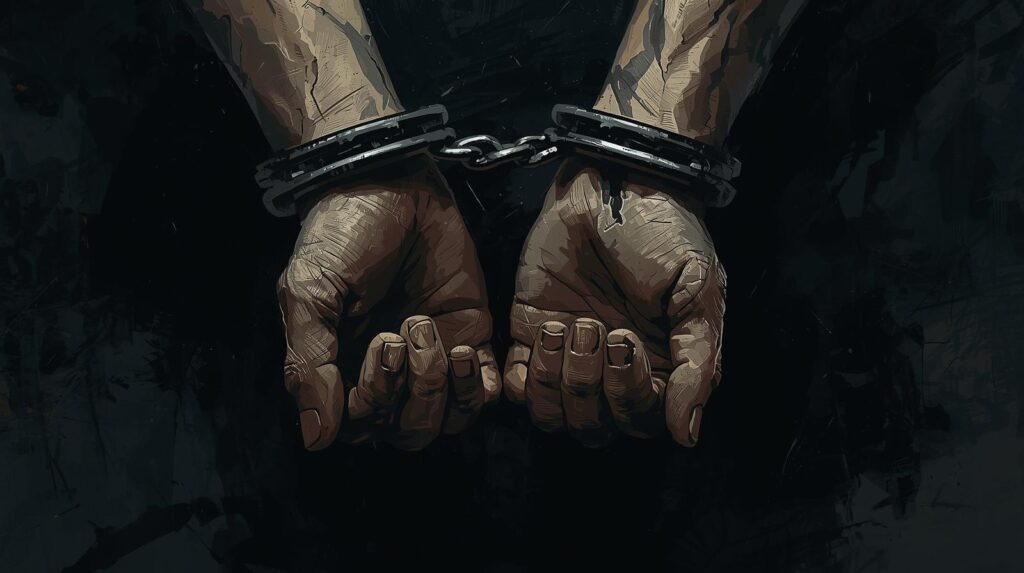
The strong and the mighty always crush the hapless ones and wield their whip over society. They exploit the poor and the wretched ones. These insignificant creatures hide within their homes, living in abject conditions. They vent out their grief with their wounded words. What else can they do? They do try to light up their homes with the lamps of their desires, but the darkness of their fate still envelopes them. Their honour is often trampled upon under ruthless feet. People might dream of a life pleasing to their heart but in reality they can’t even do that as the fuel of their desires always remains damp and moist. The cruel force of time makes their lives a veritable hell. The rulers, in order to keep the masses under their thumb, use not only force but also might and intrigues to create history. As per the rulers’ orders, people can’t wear their turban on their heads, but are expected to keep their mouths shut and their throats muffled. Even after independence, these rituals of slavery persist, and who knows till when would they continue to do so? Due to the scheming manipulations of the callous political touts, freedom is more of a crime for them. The blind government distributes its munificence to unworthy people. In today’s context, the saint is a liar, and the thief is truthful. In such an environment, no one can nurture the blossoms of happiness in the garden of one’s heart. All around, due to gunpowder smoke, dust, storms, whirlwinds of fire, commotion and the stench of dead bodies, there is chaos and darkness. The two-fanged snakes often sting the masses. Heart-rending shrieks mourn their plight, and even in this village, where many women had been raped, screams of lament had raised a commotion. The work-force of the administration had cordoned off the entire village in a combing operation to nab the militants and rebels. It was a crackdown on the whole village. A Jawan was announcing on the loudspeaker that all the men should come out of their houses and gather in the school grounds because their houses were to be searched to capture the extremists. It was also said that the women and children could stay within the house. The men had come out in the school grounds and the army personnel had surrounded them. An identification parade of the village people was carried out in front of the informers sitting in four jeeps with their faces covered. Anyone towards whom the informers raised a finger was made to sit in an armoured vehicle. This operation continued for many hours.
On the other hand, two units of our “brave” army Jawans were busy searching peoples’ homes, while groping each and every body part of women from the age groups of twelve to seventy, with their guffaws echoing through the air. Flowers un-blossomed, in full bloom, and even withered ones were kneaded and crushed to their hearts’ content. Havoc was let loose and doves fell prey to the hunters. And then, the “brave” soldiers, regurgitating with their feasting of innocent young girls as well as hapless women, came to the school grounds. The crackdown was over. The administration’s team had left after finishing their ‘task’ and people had returned to their homes.
Back home, the people found that the bangles of their mothers, sisters, young girls and wives were broken and their clothes were ripped and torn. Women lamented their nakedness and their violated honour. The helpless villagers, on seeing all this, began to loudly rant and rail. They lamented the bad times, and deplored their lot, their helplessness and their destitute plight. Their tears singed their eyes. Their grief, agony, sadness, despair and ignominy suffocated them. The law was in the grip of gun-toting men, and hapless human beings were trapped in the tangle of might and treachery. Democracy had made a mockery of the people. Strikes, processions and rallies were suppressed with gunpowder. The countless unfortunate dead ones were buried under the earth, and anonymous funeral processions were grieving in silent lament. Volcanic resentment was brewing in the hearts of the village youngsters and elders. Their anger began to explode. Someone’s mother had been raped, another’s sister had been defiled, and the honour of still another’s daughter had been violated.
The honour of Salam Pandit’s mother and sister had also been violated. The cauldron of wrath was on the boil for a few days. Then some belligerent young men became hell-bent to take revenge. They met some militant leaders and fell prey to their evil counsel. Despite knowing that the arms are friends to none, they crossed over to the other side of the border for arms’ training. One among those who went across the border was Salam Pandit, who was the only son to his parents, and God had bestowed upon them the gift of his birth as a result of the blessings of many saints and prophets.
There, they were sent to a training camp in the Neelum valley. The training began. Along with handling weapons, they were also made to understand newer meanings of Islam, were made to chant the mantras of extremism. They were fed upon stories of the houries in paradise and the torments of hell. They were taught lessons about martyrs and gazis. The difference between Kafir and Moman was explained. But Salam Pandit was initiated into the essence of body and soul, of humanity. He had opened his eyes amidst the knowledge of Irfan. Pious souls, saints and rishis resided in his heart. He had just wanted to take revenge against those soldiers who had robbed his mother and sister of their dignity. But he had no desire to become an extremist. He soon became disillusioned there. In the camp, apart from the soldiers, even the Maulanas used to come and indoctrinate them with distorted versions of religion. Salam Pandit soon understood from the atmosphere of the camp that here, appearances were very different from reality, what looked benign was actually very ugly. Here, in the name of freedom, lessons in destruction were given. Salam Pandit used to spend many sleepless nights, staring vacantly into the sky. Even while in the training camp, his eyes used to migrate to his home. Remembering his parents and sister, he used to heave deep sighs and shed copious tears. He used to think that out of the frying pan, he was caught in the fire. When he looked at their ways, his mind used to be in turmoil. Salam Pandit had never realised that a man was known by the company he kept. Here, he was in the midst of people who burnt others’ houses in order to warm themselves. How could anyone make them understand that even those weapons used to injure or kill others finally get rusted one day? It was a very tough time for Salam. He was gradually drowning in the tsunami of problems. He was sick of the camp. He started saying to his fellows that he wanted to leave the camp and go back home. When the camp commander and the agencies came to know about it, they rebuked him in the filthiest of words. Abuses and thrashings further wounded him, but he had made up his mind to run away from the camp, because even while being here he was all alone, he used to shed tears through sleepless nights. His mind was mired in a deep swamp. The next day at dawn, he started preparing to leave the camp and go towards Sharda, so that he could cross Kishanganga and while hiding in the Teetwal jungle, could wait there till the night came. But that very day, another group under the leadership of the guide reached the camp. One of the boys amongst them gave him his father’s letter, that urged him not to come back home at any cost because the police and the army were hunting for him like sniffer dogs. The moment he crossed the border, the informers and trained agents would send information about his whereabouts, so he should not commit the blunder of returning home. That boy was Salam’s neighbour. He told Salam that the police had picked up his father several times to inquire of his whereabouts. His father was also tortured and his life was made very difficult. The informers, their associates and the secret service agencies used to raid various places in search of him. Therefore, coming back would be meeting the call of death.
Salam Pandit was very depressed and upset. He was worried about his family but he could do nothing. He wanted to rehabilitate his ruined home and become a support for his parents. He wanted to put an end to violence, terror, fear, helplessness and injustice from his paradise. He did not want that beyond the border, he should lose touch with his land, because across the border it was a foreign land. He wanted to reunite with his relatives as soon as possible but his father’s letter had dashed all his hopes to the ground. But it was also certain that he did not want to remain in the camp. He knew that terror and blood cannot go hand in hand. That was the reason why, at the first opportunity, he ran away from the camp. He kept walking the whole night and in pre-dawn hours reached the Tamboli township. There he met a young girl, who was a teacher in a children’s school. Salam Pandit narrated his tale of woe to her. Looking at the fair, white-complexioned, handsome and glamorous young man, the girl felt sympathy for him. She took him to her home. Her name was Zainab and her father’s name was Rahim Baksh. Rahim Baksh used some political influence and money power to pull him out of this struggle. He also generously helped Salam in setting up his business. With Rahim bakhsh guidance, Salam opened a shop in Tamboli, where he kept provisions, clothes and other things of day-to-day use for sale. Gradually, Salam Pandit’s business picked up, proving the veracity of this adage —- first year in business means loss, second year is even and third year brings profit.
Salam’s shop was making profit. He was very grateful to Zainab and Rahim Bakhsh, whose love, patronage and financial help had helped Salam in coming onto his own. Salam often went to their house, meeting Zainab gave him a lot of happiness. Slowly this bond of warmth turned into a relationship. Salam and Zainab got married and started leading a happy life. Two children were born to them — Imran and Amina. They lived a comfortable life. Seventeen years had passed with Salam living across the border. His children had passed their 10th and 8th exams. Salam used to send letters to his parents through the extremists crossing over the border. He used to send photographs of his family and also wrote to them saying that they should create favourable conditions for his return to his parents. But that could not be.
One day Salaam and Zainab had gone to Lipavadi to offer condolences on the death of a relative. During their return journey, the police arrested Salam and whisked him off. From the police station, he was sent to the interrogation centre in Muzaffarabad. Rahim Paksh and Zainab met senior police officials and the deputy commissioner, presented proof of his innocence but they did not pay heed to them. Zainab knocked at every possible door but nothing worked. At the Interrogation Centre, Salaam was badly tortured. His bones and knees were broken, and he was badly wounded. Because of this, he was sent for treatment to Khalifa Bin Zayed Hospital. When Rahim Baksh and Zainab learnt about it, they went to meet him at the hospital but they were not allowed to meet Salam.
After some time, Zainab received Information that Salam Pandit had been taken to Rawalpindi by the agency. Zainab’s life was completely ruined. Those cursed fellows had filled her eyes with tears. She pleaded before every officer of the Secret Service Department, but there was no hope was in sight. Everywhere, she came across brutal and savage beasts. She used to wonder if God had stopped making compassionate beings. The autumn season had come to stay with her. Without Salam, she turned into a heap of ash. Her children forgot to laugh, and her home became desolate. The sufferings of life had withered Zainab’s heart. Pain, grief, bad times and debt chased her like a shadow.
She went to Rawalpindi, met an officer from the Secret Service Department and said, “We offer prayers for you and sympathize with you but you bring us to harm and destruction. Due to the excesses of the regime across the border, the innocent Salam had come over here. But you put his life vessel onto the furnace and completely singed it. What has that unfortunate man got in life? The regime of the rulers on both sides is the same.”
“Bibi! He has confessed his crime.”
“My Lord! In the face of torture and thrashing, even a ghost would dance to your tune. How would that poor wretch withstand your torture? But then, who would dare to ask you to respect the truth? Saheb ji! Salam is a pure, loving and decent man. He has never gone against the law. He is my husband and my life. We work hard, earn our living and are grateful to God. You have arrested Salam for no reason. A helpless man’s tears and the girth of his menacle surely lead to hell. Therefore, have God’s fear in your heart, and release Salam. Since he has left, we have begun to starve. Our hearth is cold, our pots empty. Saheb ji! This is what our life has come to! You can’t bury a living man. This life is short-lived. Whether high or low, we all have to end up in our graves. All these conflicts will be over then. Only God’s name will remain. Our Muslim brothers here have taken to robbery and infighting, and Islam has become restricted to books. Where do we plead our case? Has the oak plant ever yielded honey? But as long as I live, I will not accept defeat. Saheb! You have made me understand one thing — you need patience to fight against injustice. But do remember that on the Day of Judgement, your justice will be in my hands.”
“Bibi! don’t utter rubbish! Your husband has confessed in writing that he has been an agent of the enemy country. Because of his information, many of our revolutionaries have been martyred. Therefore, we cannot release Salam Pandit.”
On hearing this Zainab was greatly surprised and she said, “But Saheb ji! If he is working as an agent and a spy for the enemy country, why has that same country declared a reward of ten lakh rupees for capturing him alive or dead?”
At this reasoning from Zainab, the officer of The Secret Service Department was bewildered. He carefully looked towards her and then said,” I will myself investigate this case again but our informers cannot have given a wrong report.”
The ill-fated Zainab, desperately fighting a losing battle, got up to leave but before departing said, “Yes, Saheb ji! Only the informers on both sides are truthful. All others are liars…”
Also read Poems by Paresh Narendra Kamat, translated from Konkani by the poet himself, and published by The Antonym.
Follow The Antonym’s Facebook page and Instagram account for more content and exciting updates.